

Music and the Stories
Every song begins somewhere.
A verse in Scripture.
A quiet moment.
A season of wrestling.
A story that refuses to let go.
This page is where I share the reflections, questions, and pieces of life that found their way into the music.
Straighten My Name
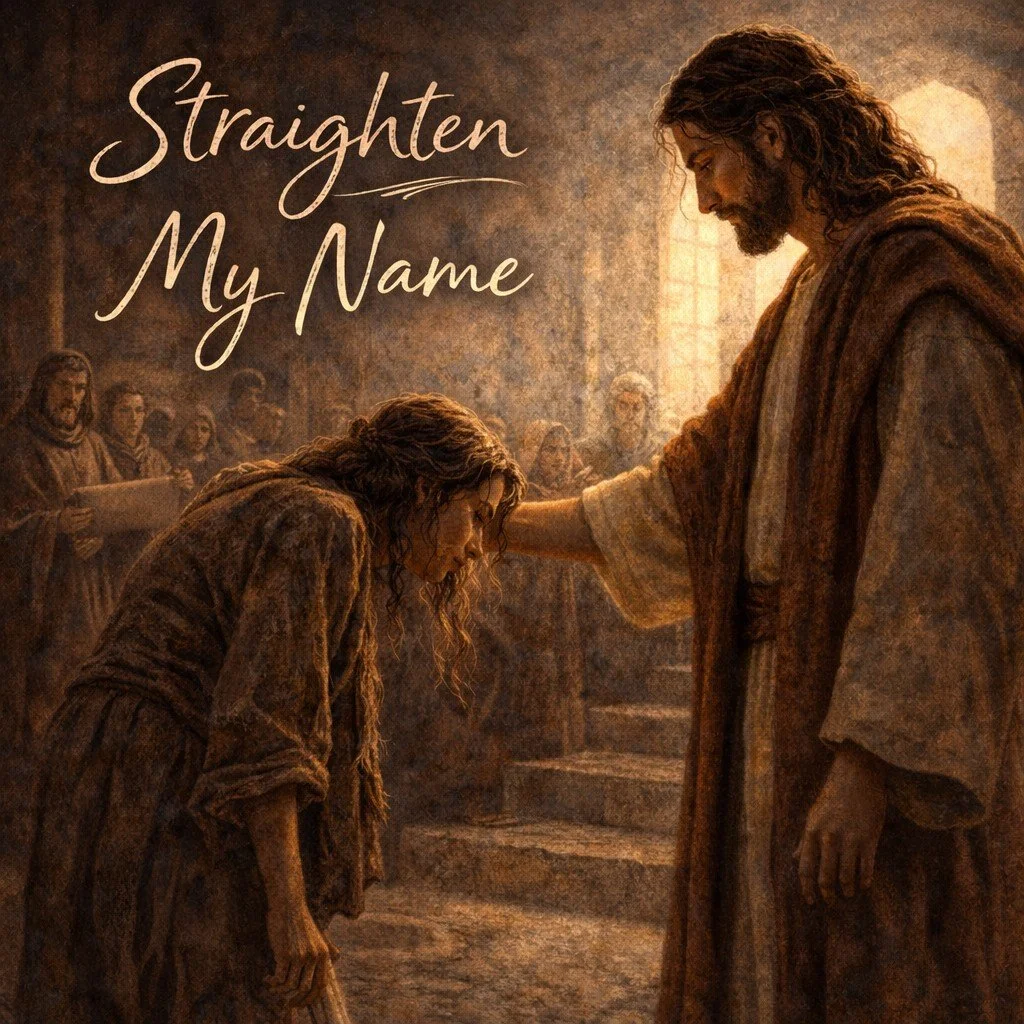
Scripture: Luke 13:10–17
Reflection:
This song came from the mercy of being seen before anything is fixed.
The woman in Luke 13 had lived bent for eighteen years. The text is simple and compassionate, she comes into the synagogue, and before she asks for anything, Jesus notices her.
What moves me most is the order of the moment.
He speaks to her first.
He calls her forward.
And before her body is made straight, He gives her a name: daughter of Abraham.
I wrote this one from inside that holy sequence, because so many of us know what it feels like to be defined by what weighs us down. To be recognized by our struggle before we are known by our name.
The line “You spoke my name straight before my spine ever moved” is the heart of the story.
Jesus does not wait for her to stand tall before He honors her.
He sees her.
He calls her.
Then He heals her.
Sometimes the deepest miracle
is not the moment we finally stand upright,
but the moment
God names us beloved
while we are still bent.
I Tore My Robes
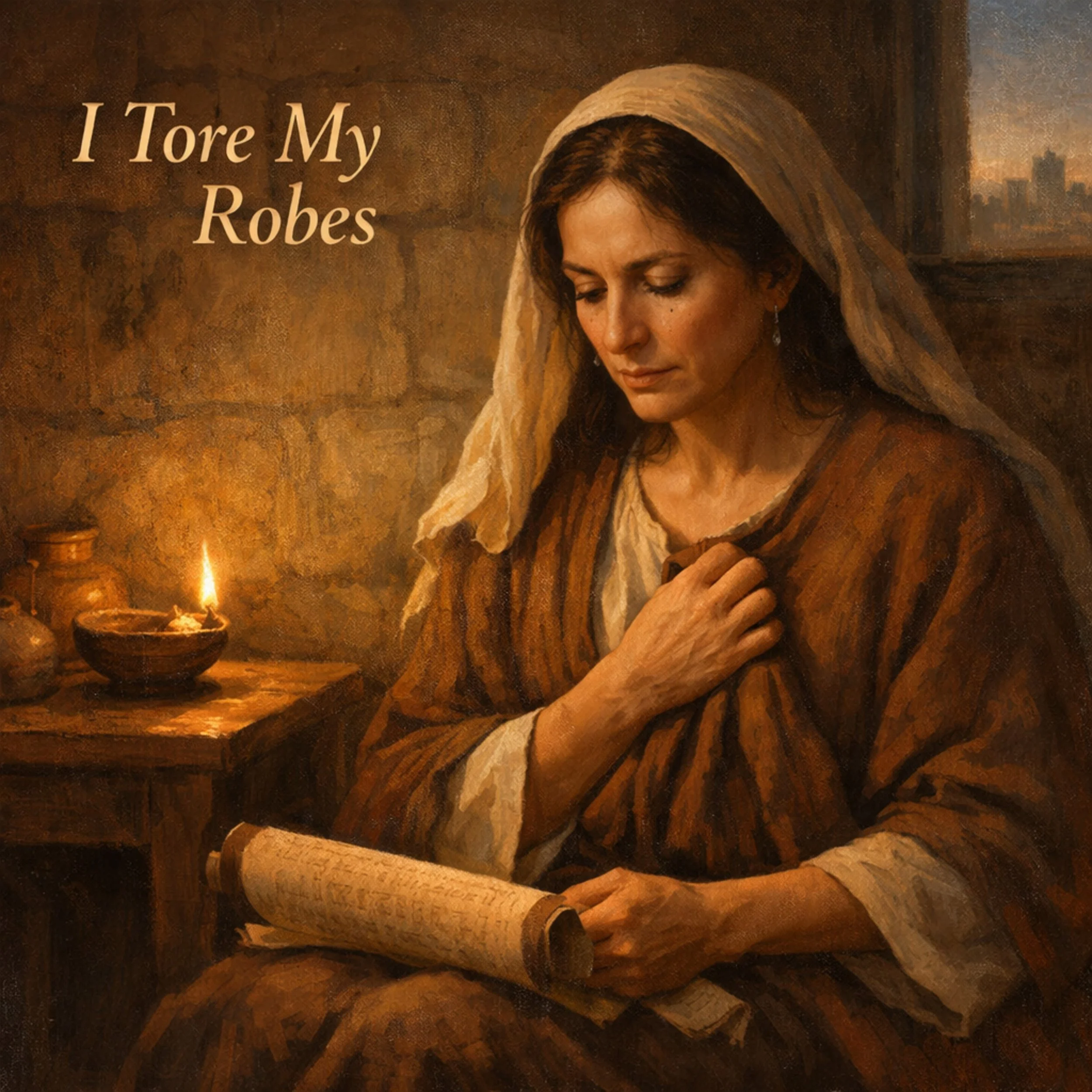
Scripture: 2 Kings 22:14–20
Reflection:
This song came from the weight of hearing truth that cannot be softened.
Huldah’s moment in Scripture is brief, but it is heavy with responsibility. The Book of the Law had been found, and the king’s heart was shaken. When the messengers came to her, she did not adjust the message to make it easier to hear. She spoke what the Lord had said.
I wrote this one from inside that trembling obedience, because there are moments in faith when clarity feels costly.
When the word is sharp.
When mercy and judgment stand in the same sentence.
The line “I tore my robes inside my heart” isn’t outward drama.
It’s the quiet breaking that happens when we truly understand what has been lost, and what God is calling back to Himself.
Huldah was not a queen.
Not standing in a palace.
Just faithful in the place God had given her.
And still, the Lord spoke through her.
Sometimes the bravest obedience
is simply telling the truth
exactly as God gives it.
Content Note: This song reflects on Dinah’s story in Genesis 34 and includes themes related to sexual harm and survival. Listener discretion is encouraged.
Daughter in the Silence
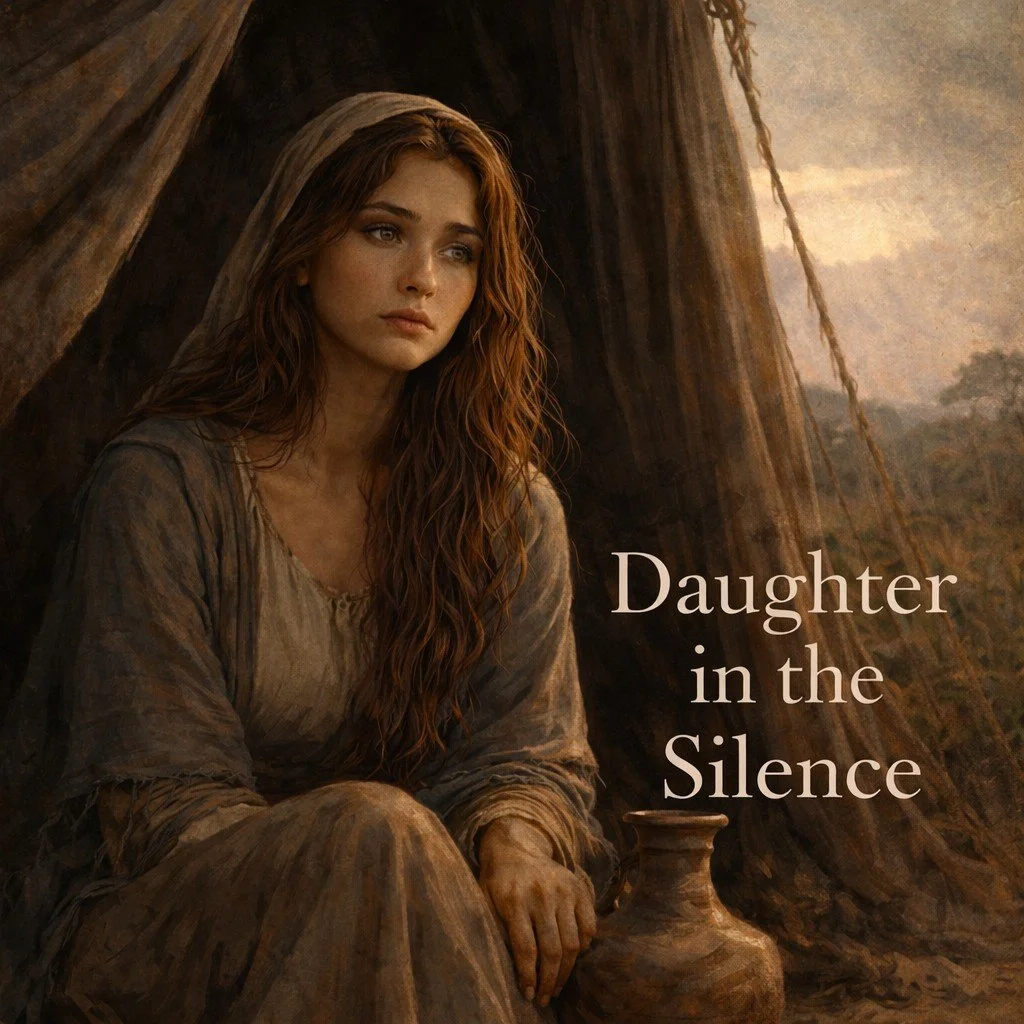
Scripture: Genesis 34
Reflection:
This song came from the silence that surrounds Dinah’s name in Scripture.
Genesis tells us what happened.
It records the anger of her brothers.
It preserves the decisions of the men around her.
But Dinah herself is never given words.
What has always struck me is how easily her story can be reduced to an event instead of remembered as a life. She was a daughter. A young woman who stepped outside the familiar, simply to see the world beyond her tent.
I wrote this one from inside that quiet absence, because sometimes the most honest way to read Scripture is to notice who is still breathing in the margins of the text.
The line “You remember what they did / But you never ask what I survived” is not accusation.
It is a gentle turning of the light — from the moment of harm to the reality that Dinah’s life did not end there.
Scripture does not give us her voice.
But it does give us her name.
And names matter to God.
Sometimes the most faithful act is simply to remember that behind every hard passage there is still a daughter
He sees.
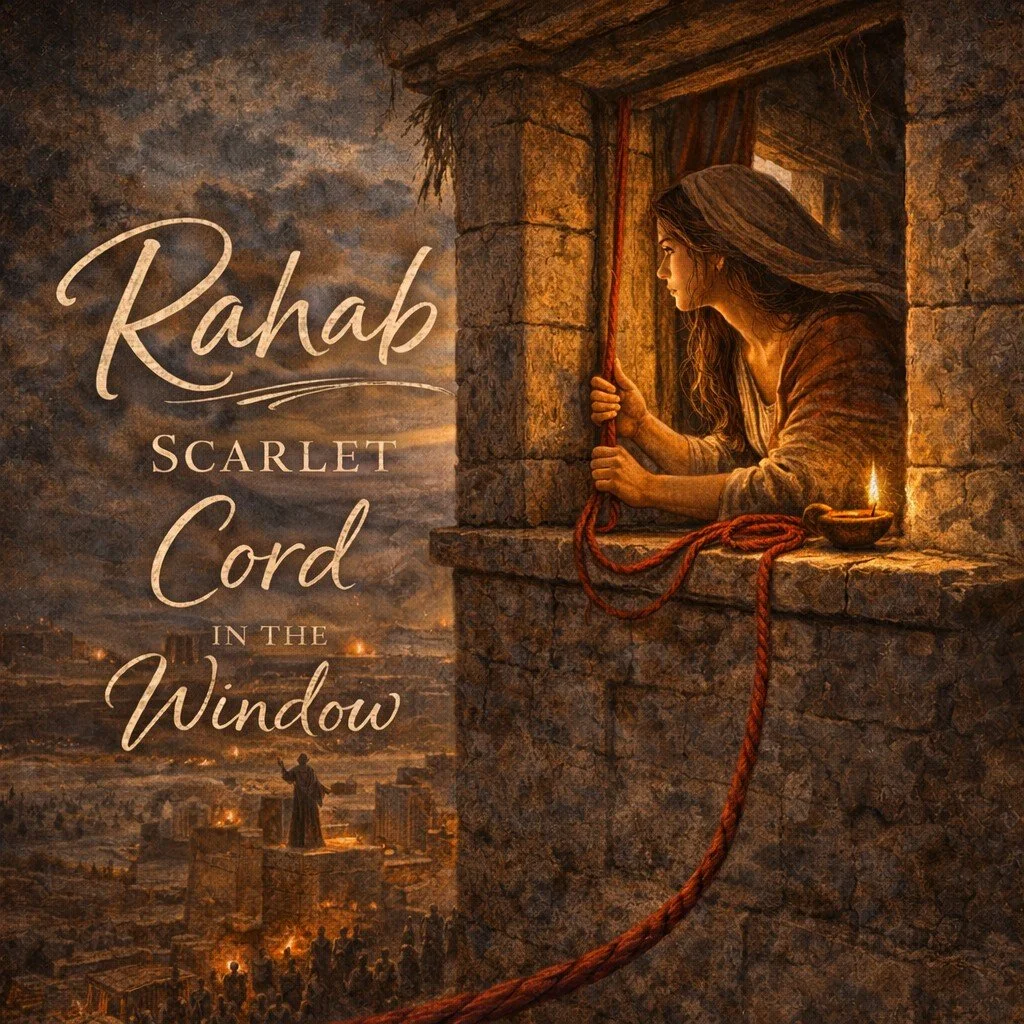
Rahab — Scarlet Cord in the Window
Scripture: Joshua 2:1–21; Joshua 6:22–25
Reflection:
This song came from the fragile courage of a woman who chose trust before she had proof.
Rahab’s story begins in a place most people would have written off. Her name carried history. Her house sat inside a doomed city. Nothing about her circumstances suggested she would become part of God’s redemption story.
And yet, she listened.
What moves me most is how little she had to hold onto. No parted sea in front of her. No covenant history of her own. Just rumors of what God had done… and a choice about whether she believed mercy might reach her too.
I wrote this one from inside that trembling faith, because sometimes trust begins with nothing more than a thin scarlet cord and a heart willing to lean forward anyway.
The line “I was banking on a mercy I could barely understand” isn’t weakness.
It’s the quiet bravery of someone who risks believing that God’s kindness might be bigger than their past.
Rahab was not chosen because her story was clean.
She was remembered because she trusted the God she was just beginning to know.
Sometimes faith is not loud certainty.
Sometimes it is simply the moment
we tie the cord,
step back,
and trust that mercy
will hold.
Bread in My Empty Hands
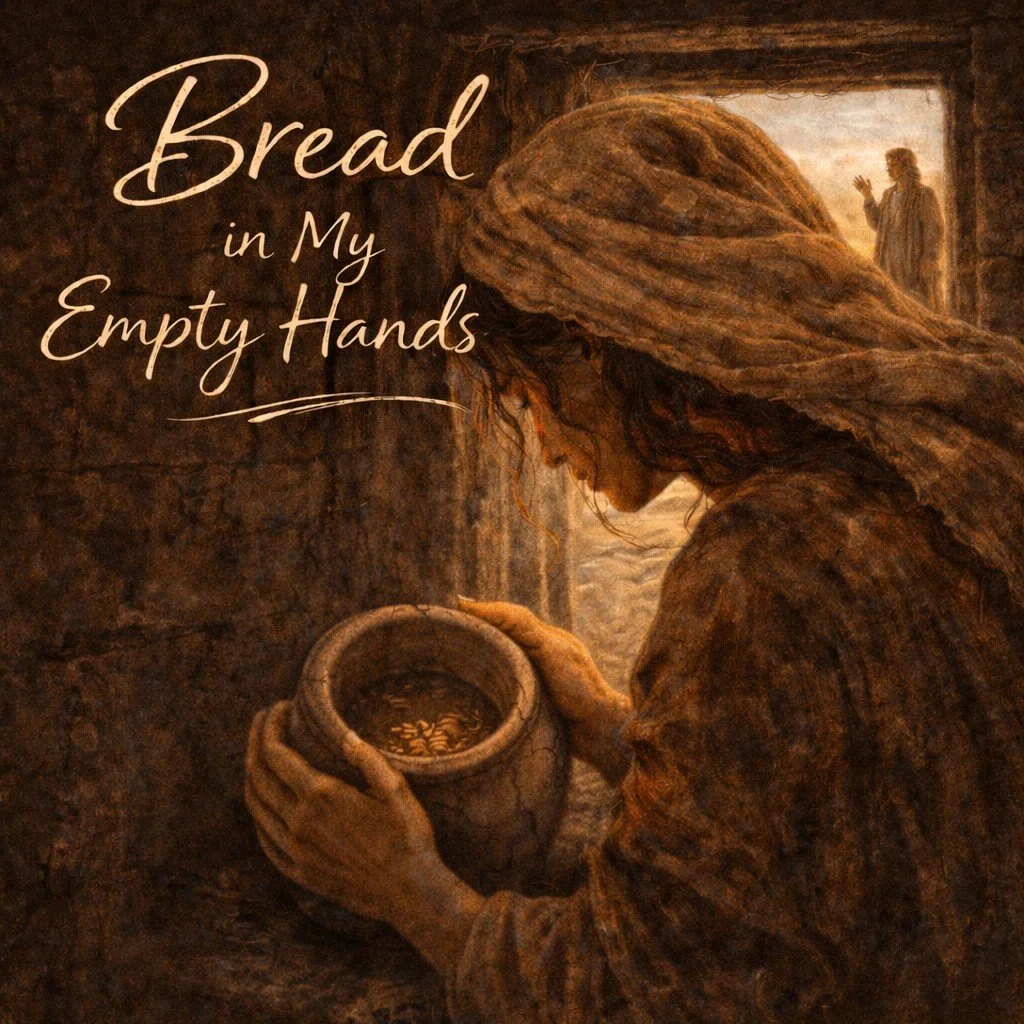
Scripture: 1 Kings 17:8–16
Reflection:
This song came from the fragile place where need feels louder than hope.
The widow of Zarephath is standing at the edge of survival when Elijah finds her. She is not preparing a feast. She is gathering sticks for what she believes will be her final meal.
What moves me most is how honest the moment is.
She does not sound strong.
She does not sound certain.
She simply tells the truth about how little she has left.
And still - God chooses that moment to begin His provision.
I wrote this one from inside that trembling obedience, because sometimes faith looks like giving when we are almost empty ourselves.
The line “Bread in my empty hands” holds the tension of the whole story.
Nothing about her circumstances suggested abundance.
But God was already at work in the small, daily filling she could not yet see.
The miracle in this story is not sudden overflow.
It is steady enough.
Daily mercy.
Provision that meets her again each morning.
Sometimes God does His most faithful work
not in the moment everything changes -
but in the quiet days
when the jar
does not run dry.
It Is Well (The Shunammite Woman)
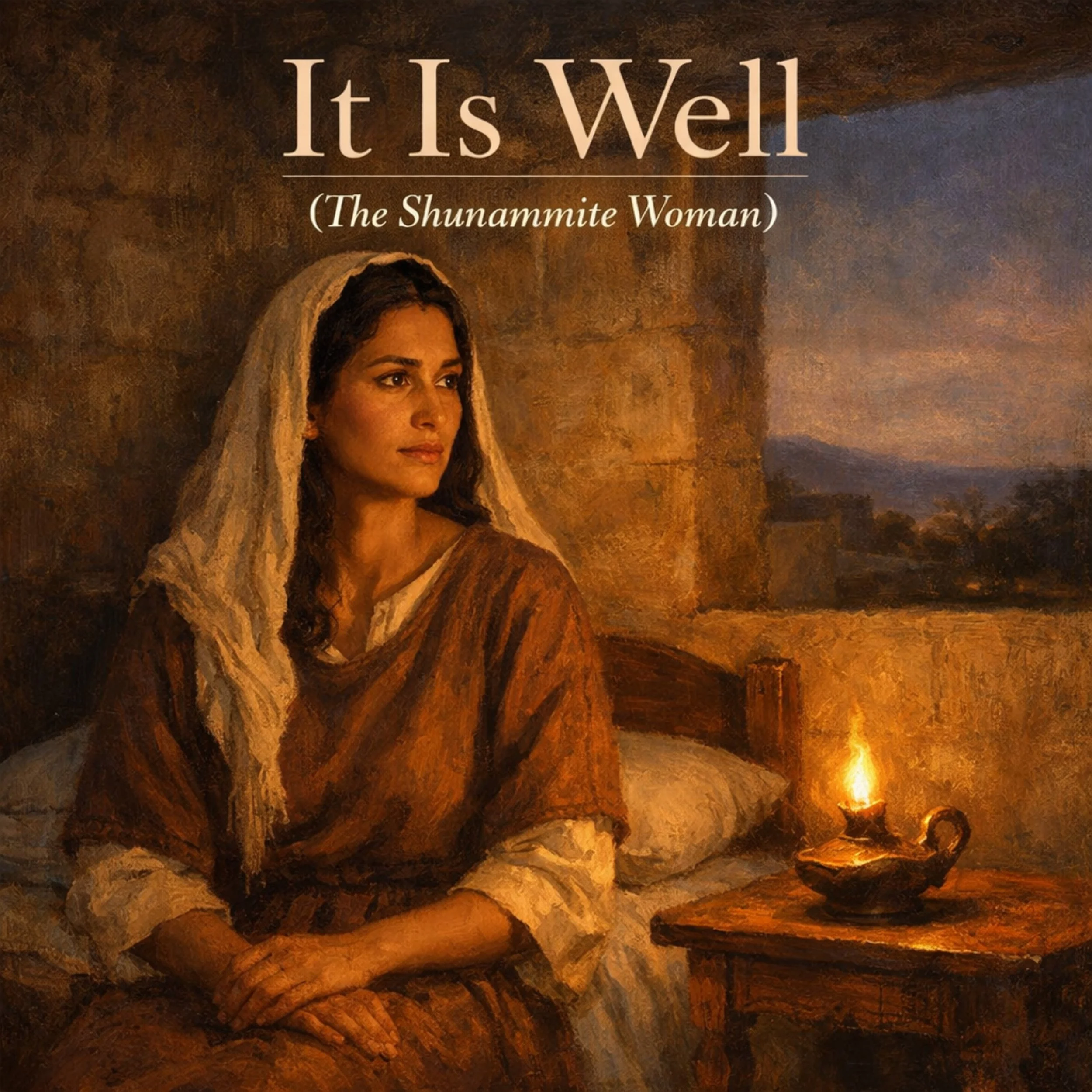
Scripture: 2 Kings 4:8–37
Reflection:
This song came from the quiet courage of a woman who chose trust before she saw the outcome.
The Shunammite woman’s story begins in simple hospitality - a room prepared, a table set, a life lived with open hands. She never asks for a miracle. She simply makes space for the presence of God’s servant.
But when promise and heartbreak collide, her faith becomes unmistakably clear.
I wrote this one from inside that tension, because real faith often speaks “It is well” long before circumstances agree.
Not because the pain isn’t real.
But because hope has already taken root deeper than fear.
The line “I will not bury what You gave” isn’t denial.
It’s the fierce, trembling trust that God is still at work even when the story looks finished.
The Shunammite woman does not shout.
She does not collapse in the road.
She walks forward with steady resolve toward the only One who can restore what was lost.
Sometimes faith is loud with praise.
And sometimes faith is a quiet voice
with shaking breath
that still says,
“It is well.”
Anna at the Temple
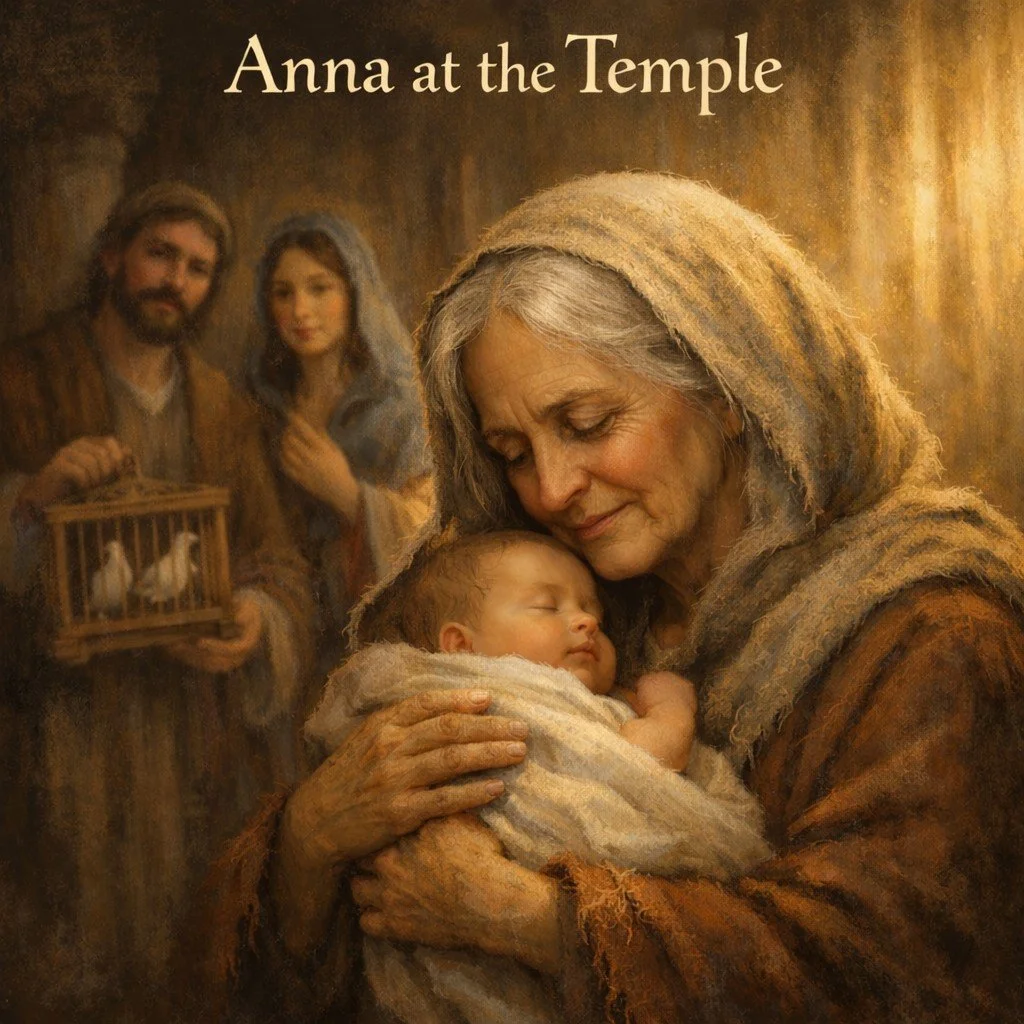
Scripture: Luke 2:36-38
Reflection:
This song came from the faithfulness of long waiting.
Anna’s story is quiet in the Gospel - just a few verses - but her life speaks loudly.
She stayed. Through grief. Through years that must have felt ordinary and unseen.
The temple became her place of steady devotion, not because the days were dramatic, but because her heart had settled on where hope would be found.
I wrote this one from inside the waiting years, because most of faith is lived there.
Not in the moment of fulfillment - but in the long obedience that comes before it.
The line “I have waited all my lifetime” isn’t regret.
It’s the deep clarity that comes when a promise finally stands in your arms.
God rarely rushes the stories He is fulfilling.
But He never forgets the ones who keep watch.
Sometimes the holiest lives are simply the ones that stayed.
Queen of Sheba

Scripture: 1 Kings 10:1–9
Reflection:
This song came from the courage it takes to go searching for wisdom.
The Queen of Sheba did not come casually.
She traveled far.
She carried questions that would not let her rest.
And she was willing to test what she had only heard in rumors.
What moves me most in her story is not her wealth — it is her hunger to know what was true.
I wrote this one from inside that determined seeking, because faith often begins with honest questions.
With the long journey.
With the quiet willingness to discover that what we thought was enough… might not be.
The line “Crossed every mile for a glimpse of the light” isn’t about ambition.
It’s the deep pull toward wisdom that refuses to stay comfortable in the familiar.
When the Queen of Sheba finally stands before Solomon, her response is not pride — it is wonder.
Sometimes the first step toward true wisdom is simply being willing to go looking for it.
Far More Precious than Jewels

Scripture: Proverbs 31:30
Reflection:
This song came from the tension between what the world measures and what heaven sees.
Proverbs 31 is often read like a list of accomplishments, but underneath the activity is something quieter - a life anchored in reverence for the Lord. The work matters, yes. But the fear of the Lord is the root that gives the work its meaning.
I wrote this one from inside the ordinary faithfulness of daily life, because most devotion is not dramatic.
It looks like early mornings.
Careful planning.
Hands that serve while the heart stays turned toward God.
The line “Far more precious than jewels” isn’t about perfection.
It’s the quiet security that comes from knowing where true worth is found.
The world will always measure by appearance, productivity, or applause.
But heaven looks deeper.
Sometimes the most beautiful strength
is simply a life faithfully lived before the Lord.
Called for Such a Time
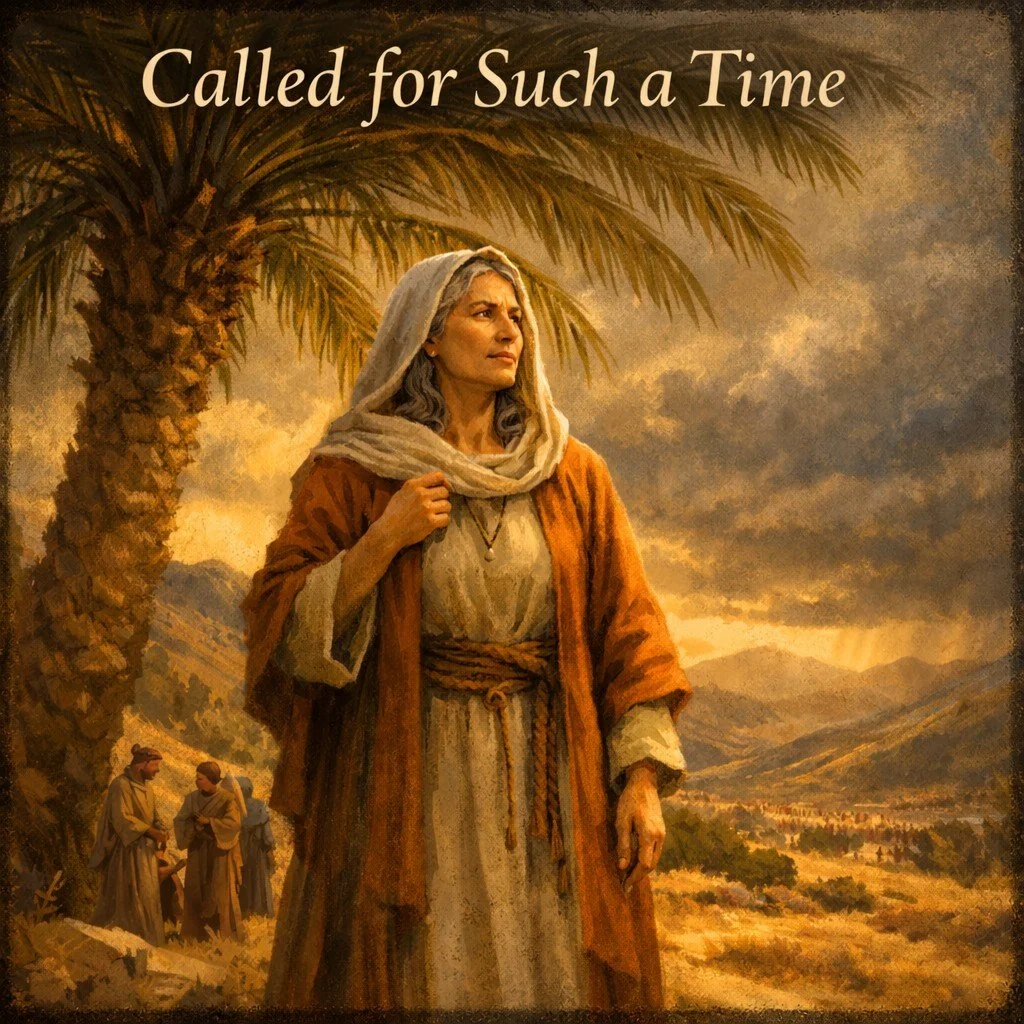
Scripture: Judges 4:4-9
Reflection:
This song came from the weight of being called when it would be easier to stay quiet.
Deborah’s story is not loud in the way we often expect strength to be.
She is sitting.
Listening.
Judging under the palm while the nation trembles around her.
What stands out most is not her position - it is her readiness to speak when the moment comes.
I wrote this one from inside that stillness, because many callings begin long before the public moment arrives.
They are formed in the quiet places where we learn to listen carefully and wait for the right word.
The line “I was called for such a time” isn’t about striving to be brave.
It’s the steady confidence that comes when obedience matters more than comfort.
God often prepares His people in ordinary days
before asking them to stand in extraordinary moments.
Sometimes courage sounds like thunder.
Sometimes it sounds like a woman
who simply stands
when the time comes.
Alabaster on the Floor
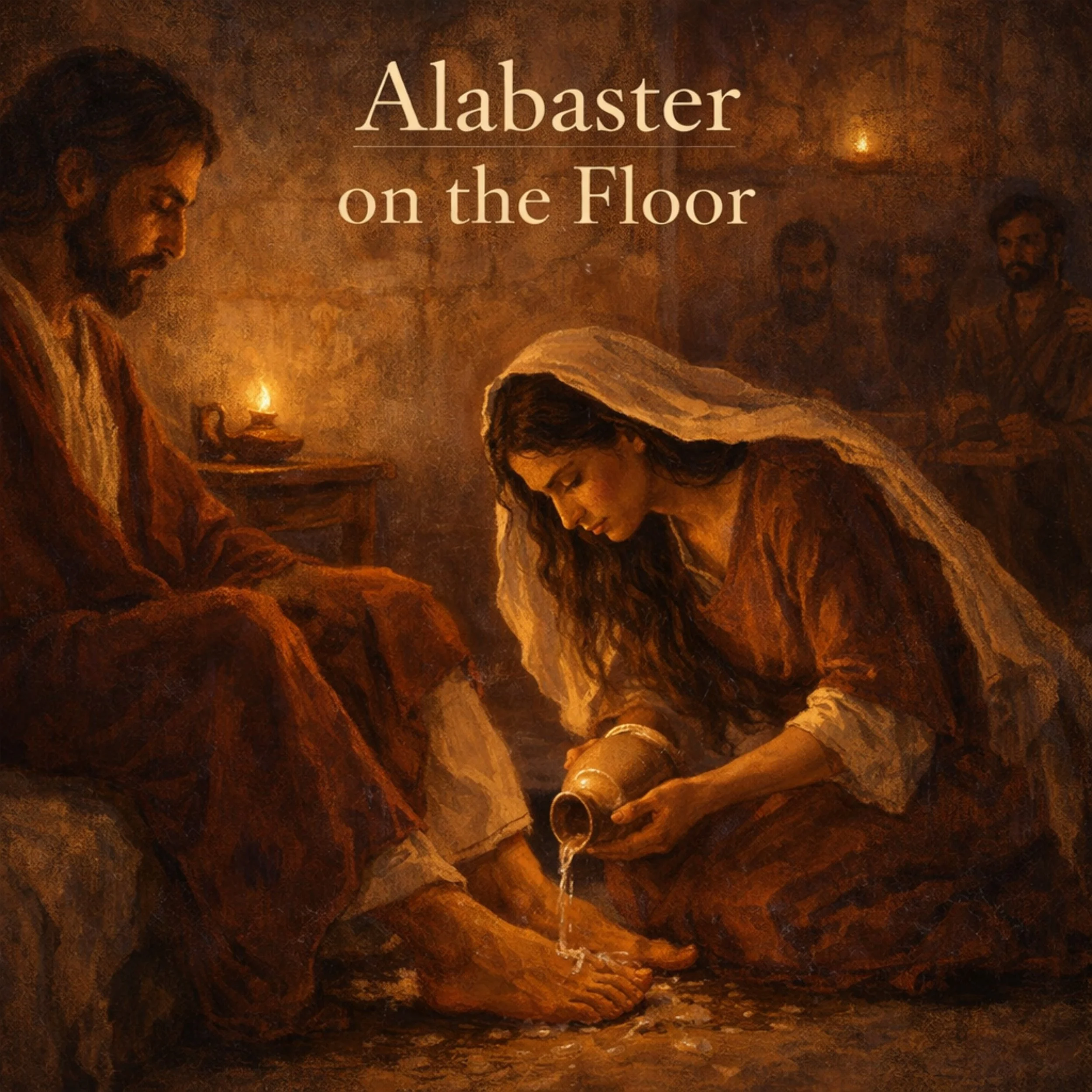
Scripture: John 12:1–8
Reflection:
This song came from the moment love stops calculating.
The woman with the alabaster jar knew exactly what it cost.
The room knew it too.
What they could not see was what Jesus saw - a heart that had already decided He was worth everything.
I wrote this one from inside her trembling hands, because the tension in the story feels familiar.
There comes a point in every life of faith when careful devotion meets costly surrender.
The line “Nothing I save for later anymore” isn’t recklessness.
It’s the quiet freedom that comes when love finally outweighs fear.
Extravagant worship rarely makes sense to the watching crowd.
But heaven has never measured devotion by efficiency.
Sometimes the most beautiful offering is simply what we were brave enough
to pour out.
At the Foot of What I Knew
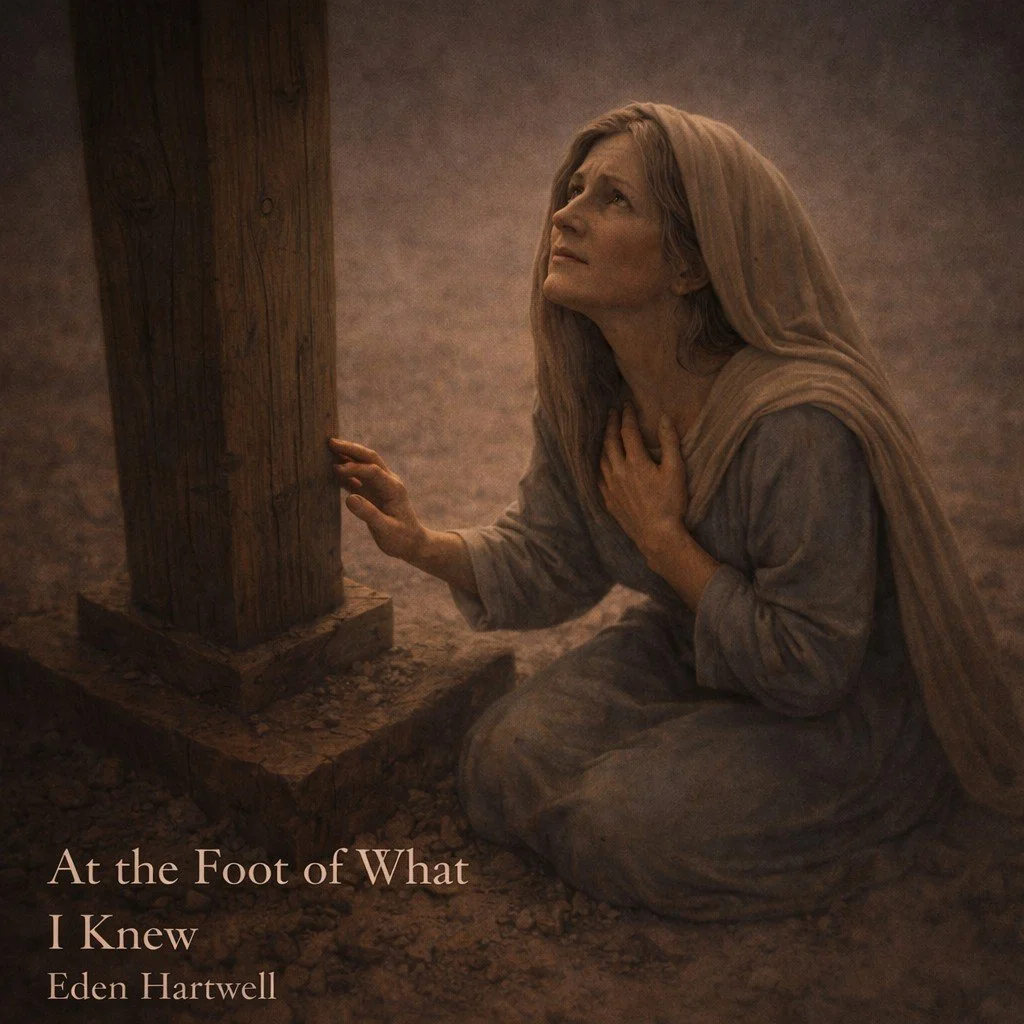
Scripture:
“Now there stood by the cross of Jesus his mother…”
- John 19:25
Reflection: There are moments in scripture we can read for years…and then one day, we arrive at them.
Not as observers. But as someone who understands. I wrote this song as a mother. There was a time I could read about Mary at the cross and feel sorrow for her. But it lived at a distance - something I respected but did not yet fully carry. And then my son grew up. He became a man. He reached the age Jesus would have been. And something shifted.
The story was no longer something I was reading. It was something I could feel.
To watch your child, walk into something you cannot stop… To know what may come, and to love them enough not to stand in the way… To carry both understanding and heartbreak in the same breath - that is a different kind of grief.
Mary had already said yes. Long before this moment. Long before the cross was ever in sight.
But yes does not make the cost smaller. It only makes it clearer. And when the moment finally came…
she did not look away.
She stayed.
That is what undid me. Not just that she knew. But that she stood there anyway.
This song is not about the crucifixion itself. It is about what it means to love someone enough to let them fulfill what they were sent to do - even when it breaks your heart to witness it.
There is a quiet kind of faith in that place. One that does not intervene. One that does not rescue. Only remains.
And sometimes…
that is the most sacred kind of love there is.

I Was Here
Scripture: Judges 11:35–37, 39–40
supporting scripture: Ecclesiastes 5:4–5; Psalm 56:8
Reflection: This song came from a story that doesn’t resolve the way we expect.
Jephthah’s daughter steps into the light for only a moment, and then she is gone.
What stayed with me was not just what happened, but how she met it.
I wrote this from inside her quiet knowing - from the space where joy had just been,
and everything suddenly changed.
There is a kind of courage that doesn’t fight or flee.
It simply remains.
The line “I was here” is not a cry for attention.
It is something softer…
a remembering.
That a life can be brief and still be full.
That being seen by God is enough.
Some stories are not explained.
They are witnessed.
And somehow,
they stay with us.
I Want to be Like Jesus
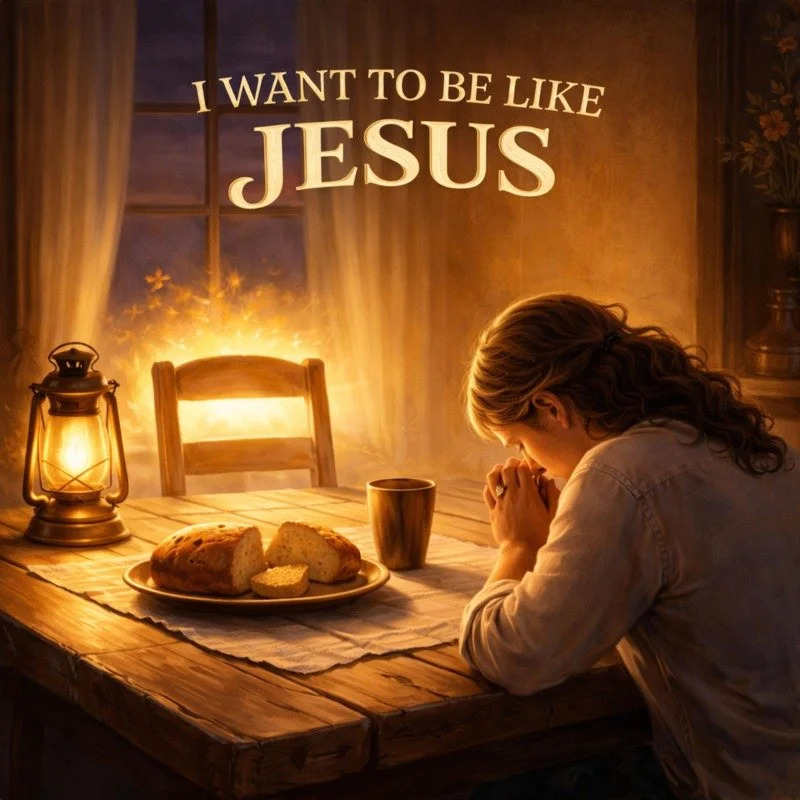
Scriptures: John 13:14–15, James 1:19, Philippians 2:5, 2 Corinthians 3:18
Reflection: There is something deeply honest about wanting to be like Jesus.
Most of us know the teachings. We know we are meant to be patient, slow to anger, and generous with mercy. But real life has a way of revealing how difficult that can be. We lose our temper, hold onto pride, or struggle to forgive when someone has wounded us.
Jesus showed us a different way.
He washed the feet of His disciples knowing some of them would soon abandon Him. He chose compassion when others expected judgment. Again and again, He showed that love is strongest when it is given freely, even when it is not returned.
To want to be like Jesus is not a claim that we have arrived. It is a quiet prayer that God will keep shaping our hearts - teaching us patience where we are quick to react, mercy where we want to withdraw, and humility where pride tries to lead.
Most days we will fall short. But the journey of faith is not about perfection. It is about allowing Christ to change us little by little.
And so the prayer remains simple:
Lord, help me be a little more like You today.
Women at the Well of My Day
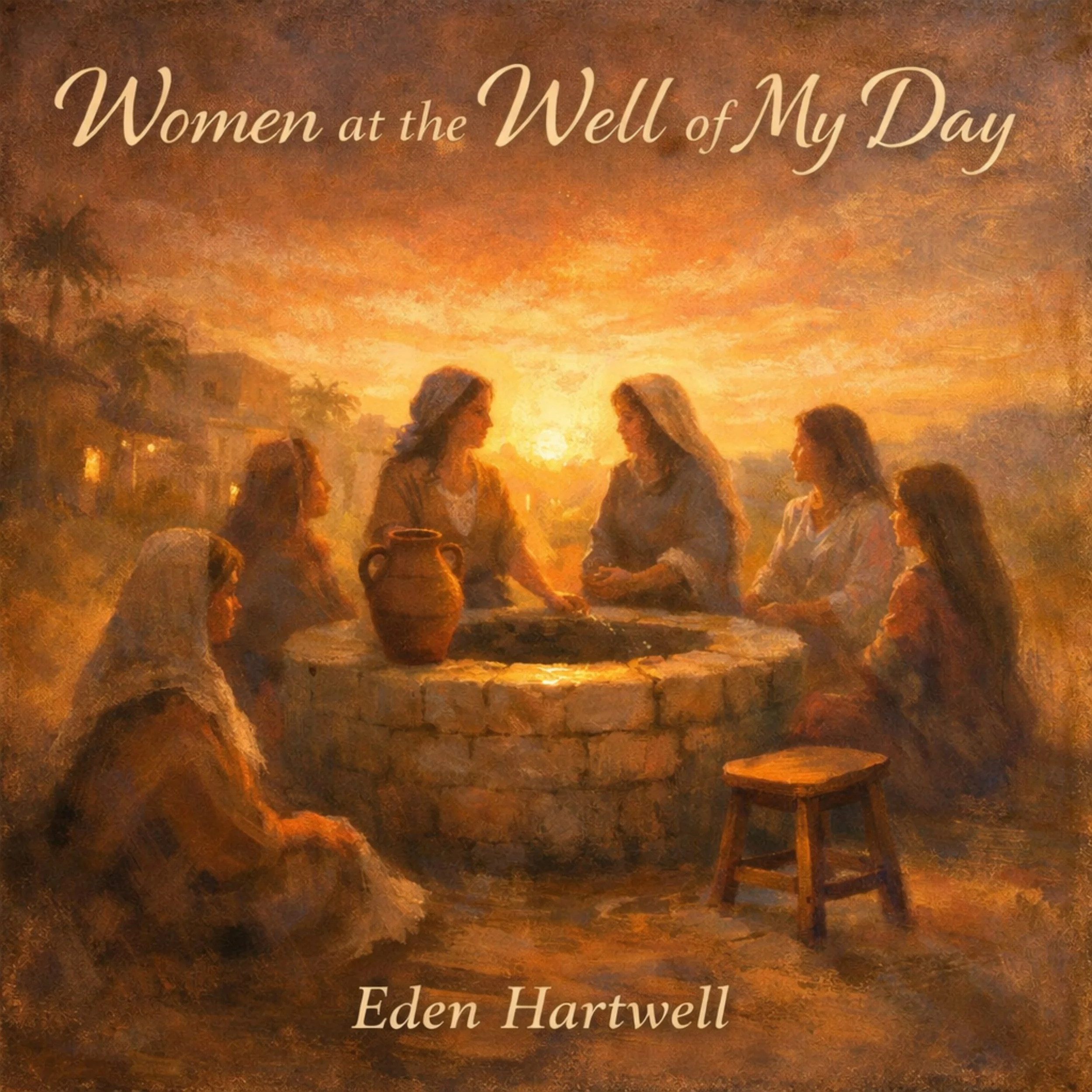
Scriptures: Ruth 1:16, Esther 4:14, Luke 1:38, Luke 10:41–42
Reflection: When I open Scripture in the quiet of the morning, the women of the Bible no longer feel distant. Their stories begin to feel like conversations.
Ruth reminds me that love stays even when the road is uncertain.
Esther shows that courage often begins with trembling hands and a willing heart.
Mary’s quiet “yes” teaches me that God’s greatest work often grows in hidden places.
And Martha and Mary still live in the rhythm of my own days-one part of me working and preparing, another part longing to simply sit and listen.
These women were not distant heroes. They were faithful in ordinary moments, trusting God in the middle of real life. Because of that, their stories continue to pour wisdom into ours.
Across centuries, they still pull up a chair beside us.
From ancient pages to our coffee and prayers, their lives remind us that faith is lived one small act of trust at a time—and the well of God’s wisdom is never empty.
Mary Magdalene in the Morning Dust
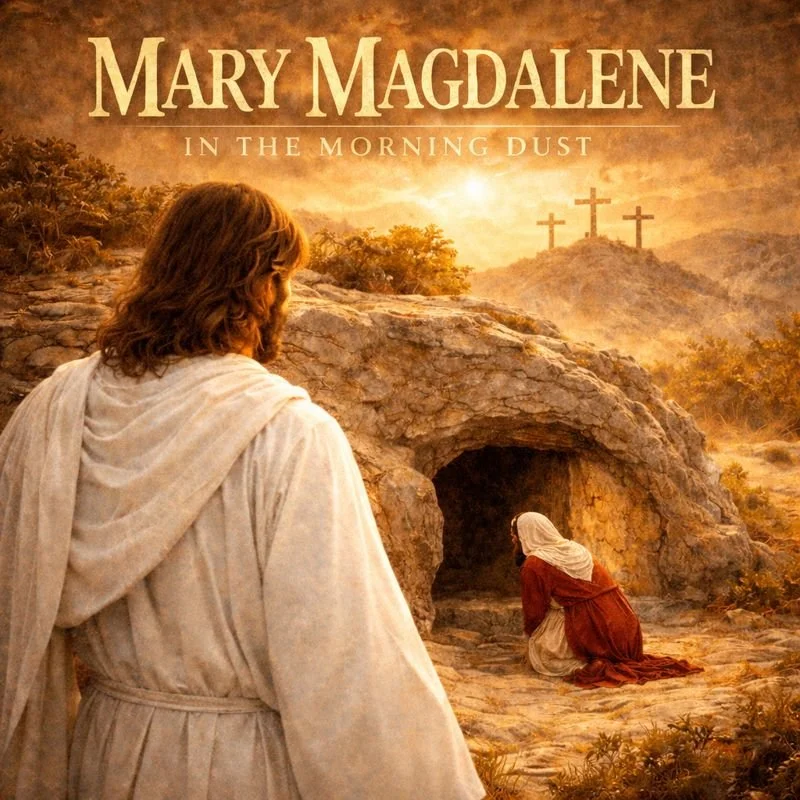
Scripture: John 20:11-16
Reflection: I was drawn to the moment before recognition.
Not the resurrection itself - but the space where grief had not caught up to hope yet.
Mary stays when everyone else leaves.
She is still trying to care for a body while standing inside a miracle she cannot see.
What moved me was how personal the turning point is.
The world is changed forever, but it becomes real to her only when she hears her name.
I wrote this song about that instant - the shift from searching for what was lost to realizing you are being called.
Faith often arrives quietly, one voice speaking directly to you in the middle of ordinary sorrow.
Mary of the Quiet Yes
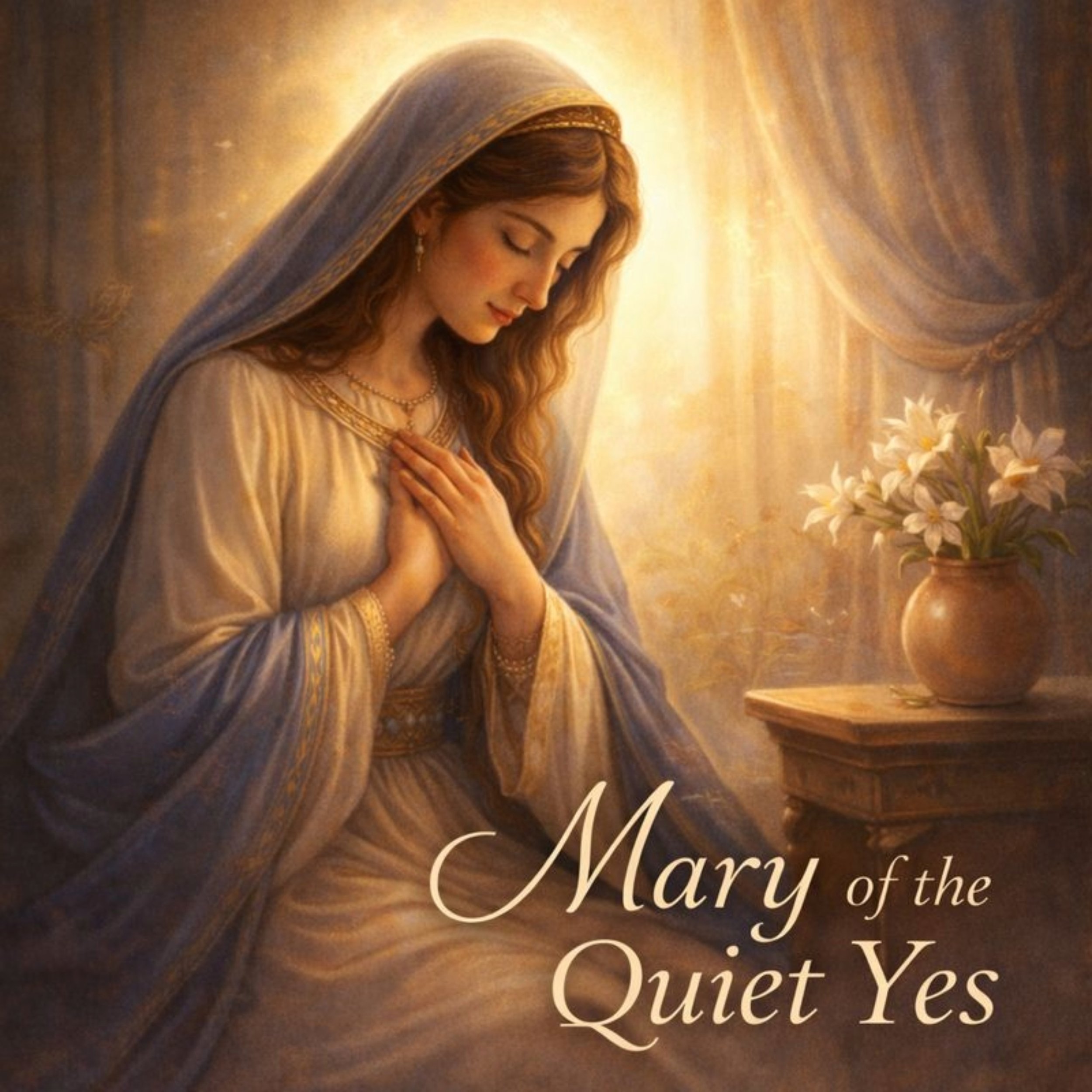
Scripture: Luke 1:26-38
Reflection: I didn’t write this song about the miracle.
I wrote it about the decision that came before it.
We often imagine Mary already peaceful, already certain.
But the courage of her story is that she said yes without understanding the life it would rearrange.
The moment that stayed with me was not the manger - it was the ordinary room where obedience first became real.
Faith sometimes begins long before joy catches up to it.
That quiet agreement felt like the true beginning.
Oil in Your Lamp
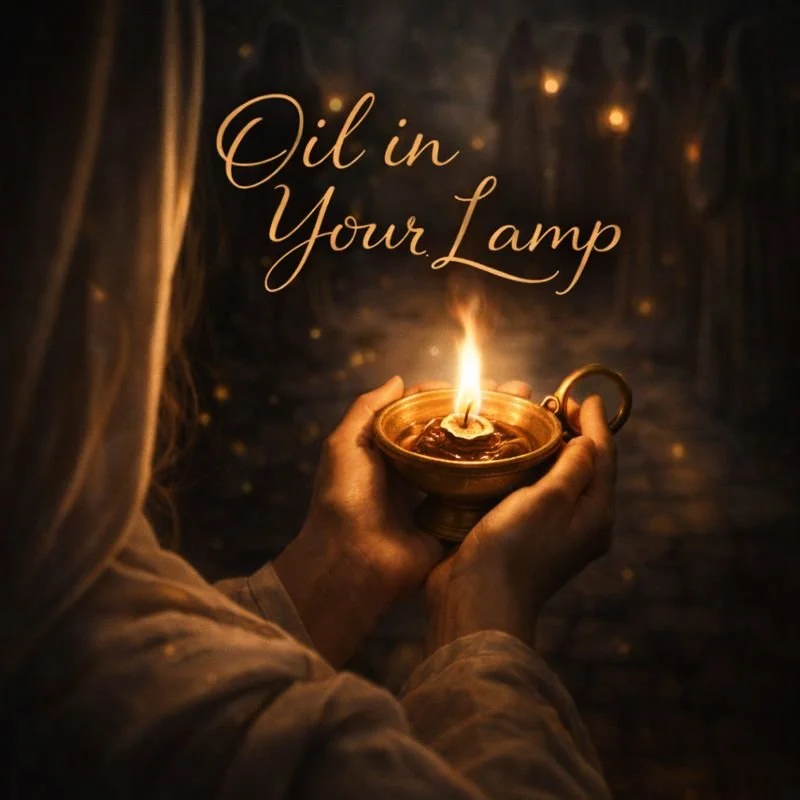
Scripture: Matthew 25:1-13
Reflection: This song came from the tension in the waiting.
The parable isn’t really about lamps - it’s about preparation that no one else can do for you.
All the women fall asleep. None of them are perfect. The difference is simply who prepared before the moment arrived.
I wrote it in first person because the question in the story feels personal:
When the call comes, will I already have chosen who I am becoming?
The line “I have oil in my lamp” isn’t confidence in effort.
It’s the quiet peace that comes from small faithful choices made long before they seem important.
Readiness rarely feels dramatic.
It usually looks like ordinary days lived in the direction you meant to go.
Miriam’s Song

Scripture: Exodus 15:19-21
Reflection: I was drawn to what happens after deliverance.
The sea has already parted. The danger is behind them.
But relief and gratitude are not always the same thing.
Miriam doesn’t just observe the miracle - she responds to it.
She leads the people in remembering what they have just been saved from before ordinary life begins again.
I wrote this song about the human need to mark a moment, to stop and acknowledge that something has changed and we are not who we were on the other shore.
Celebration, in this story, is not noise.
It is recognition — choosing not to forget the help that carried you through.
Ruth
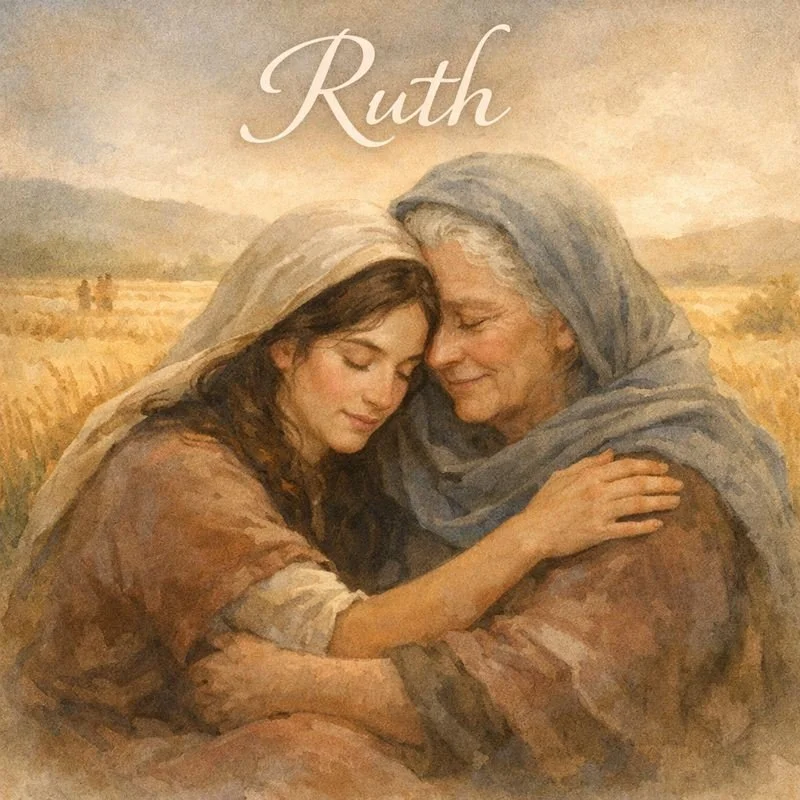
Scripture: Ruth 1:16-17
Reflection: I kept returning to the simplicity of her decision.
Ruth is not promised safety, provision, or belonging.
She chooses Naomi knowing the road ahead will likely be harder, not easier.
What stayed with me is that her faith is expressed through relationship.
She does not speak about belief - she walks beside someone who needs her and lets that choice define her future.
I wrote this song about devotion that isn’t built on outcome.
The kind that commits before knowing what it will cost or where it will lead.
Sometimes the holiest direction is simply the one where you refuse to leave.
Hannah’s Prayer
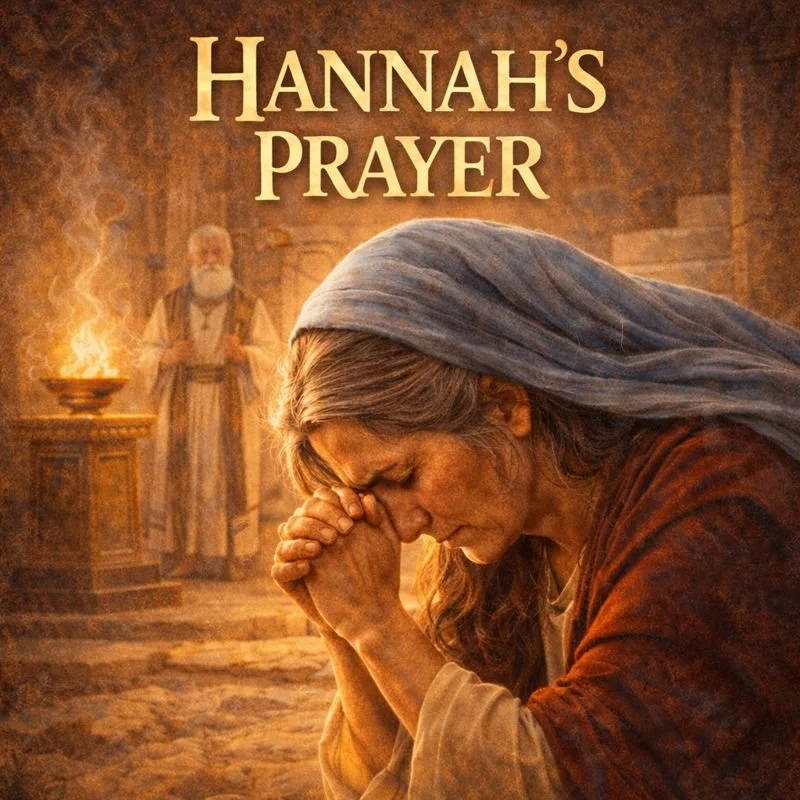
Scripture: 1 Samuel 1:10-18
Reflection: I was moved by how unguarded her prayer is.
Hannah doesn’t tidy her words or hide her longing.
She speaks with the kind of honesty that can look strange to people standing nearby.
What drew me to this moment is that nothing has changed yet.
The answer hasn’t come. The future is still uncertain.
But she leaves different than she arrived.
I wrote this song about the point where pleading turns into trust, when being heard matters more than being immediately helped.
Sometimes peace begins before circumstances do.
Twelve Long Years
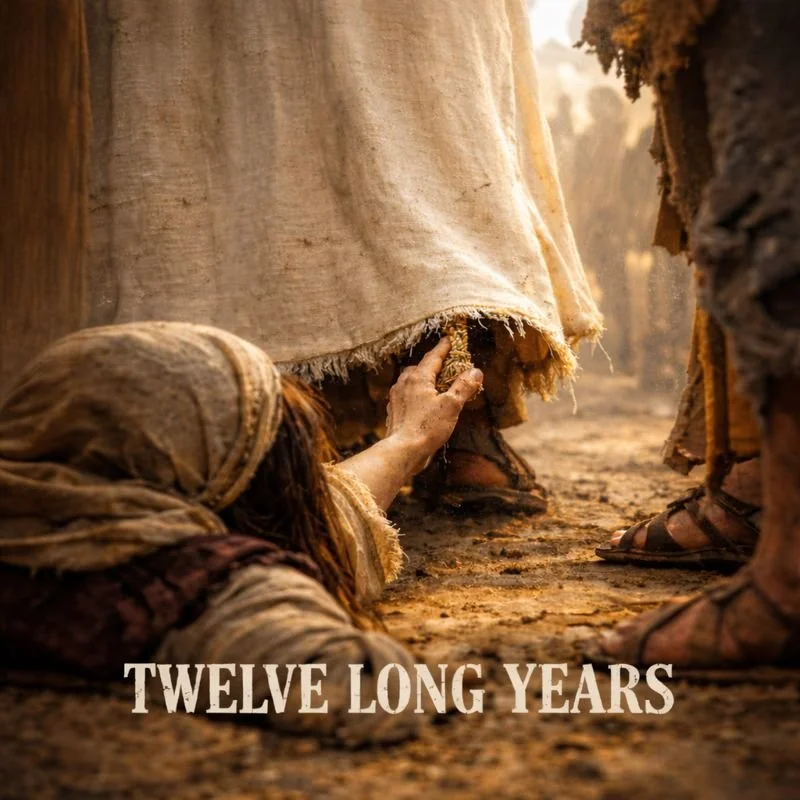
Scripture: Mark 5:25-34
Reflection: I was drawn to how quiet the miracle begins.
She isn’t asking publicly. She isn’t stopping Him.
After years of disappointment, she reaches for the smallest contact she can - the edge of a garment in a moving crowd.
What stayed with me is that she expects almost nothing and still reaches anyway.
The healing happens in an instant, but the courage to try again took twelve years to form.
I wrote this song about faith that survives exhaustion, the kind that keeps moving toward hope even when hope has felt unreachable for a long time.
Sometimes belief looks like one more attempt when you have reasons to stop.
Esther
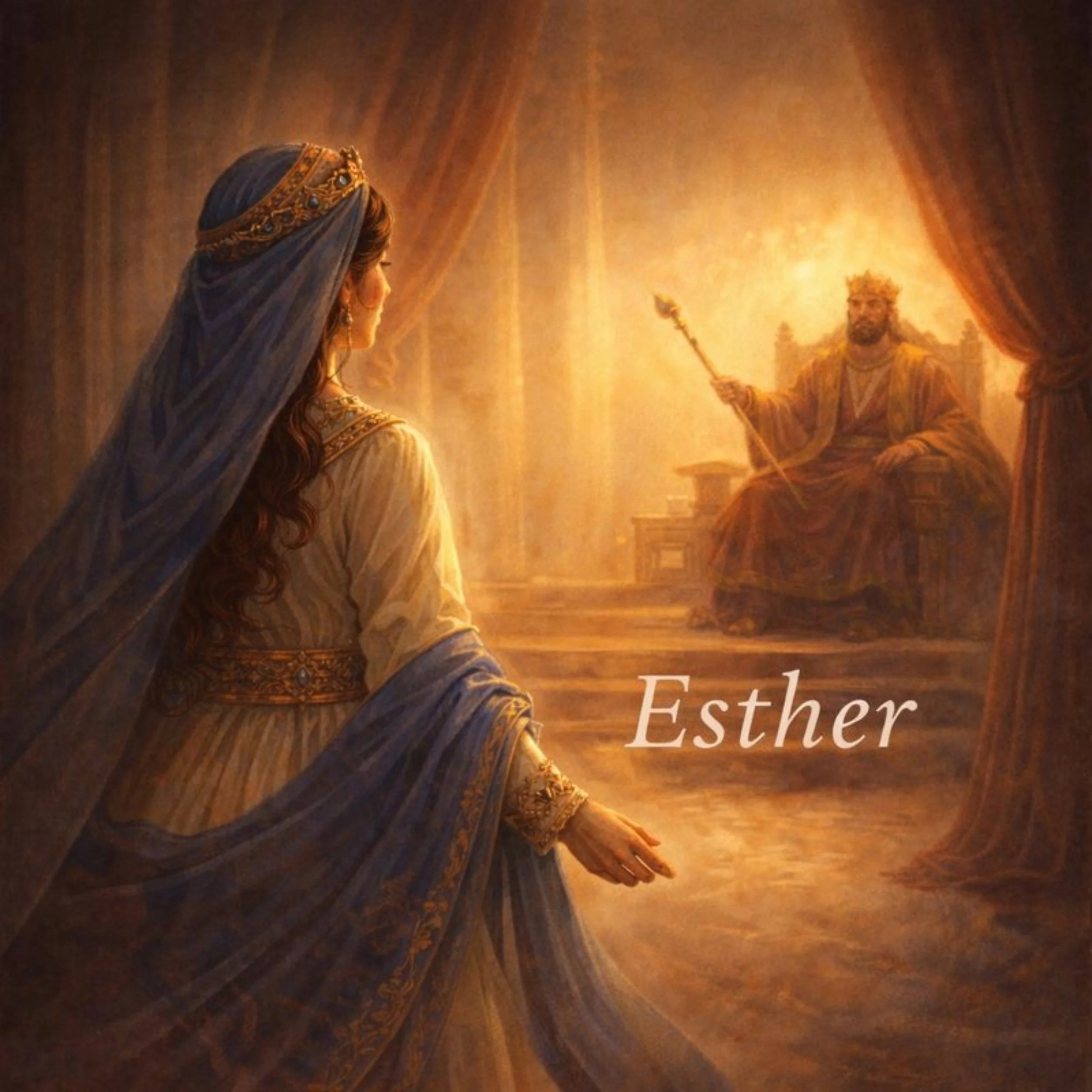
Scripture: Esther 4:13-16
Reflection: I was drawn to the moment before action.
Esther is given a choice she never asked for - remain safe and silent, or step forward knowing it could cost her life.
The story turns not on certainty, but on willingness.
What stayed with me is that courage here isn’t loud.
It’s a decision made in private that becomes visible only afterward.
I wrote this song about the weight of responsibility when you realize your position matters for someone else’s future.
The risk is real, and so is the hesitation.
Sometimes faith looks like moving forward while still afraid.
Abigail the Fearless
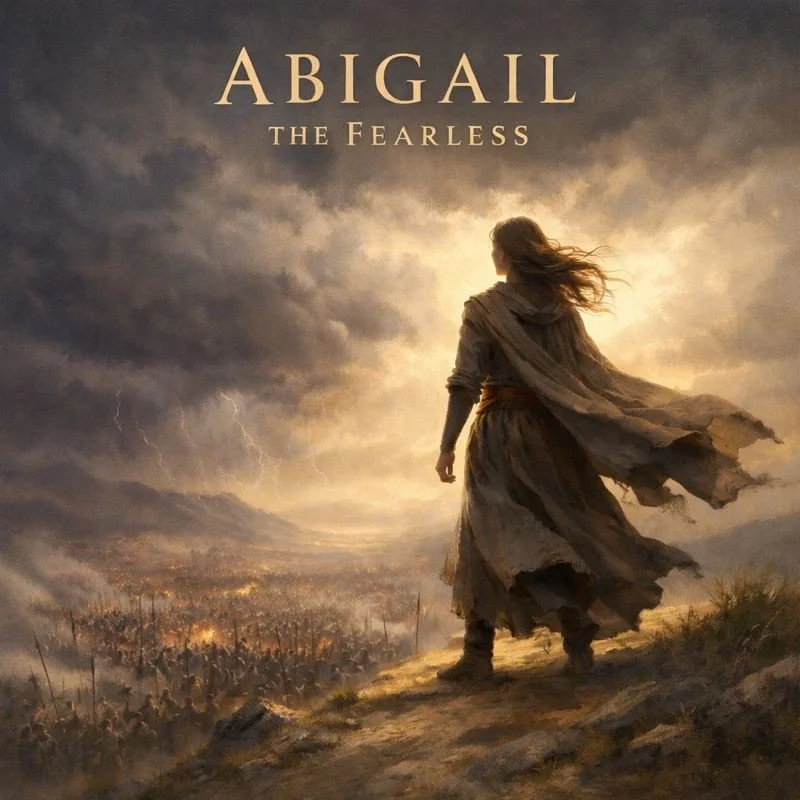
Scripture: 1 Samuel 25:18-35
Reflection: I was drawn to how quickly she acts.
Abigail doesn’t wait for permission or for someone else to fix the danger.
She sees what anger is about to cause and steps directly into its path.
What stayed with me is that her courage is thoughtful, not reckless.
She brings humility, truth, and peace into a moment that could have turned violent.
I wrote this song about the kind of bravery that protects others, the willingness to intervene before harm becomes irreversible.
Sometimes strength looks like meeting fury with wisdom.
Come, Follow Me
(The Mother of James and John)
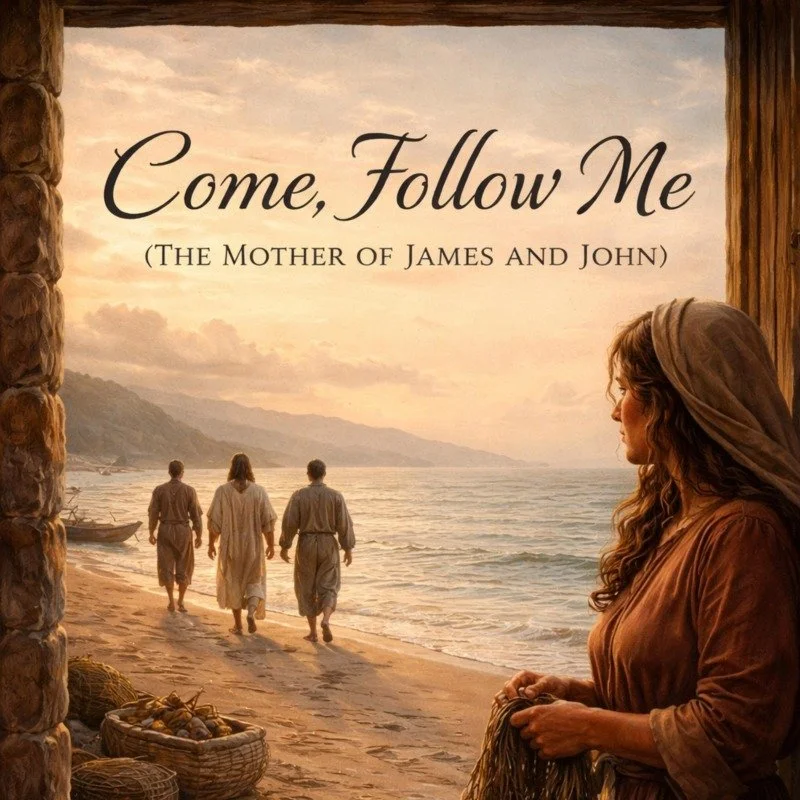
Scripture: Matthew 4:21-22
Reflection: I was drawn to the moment from the shore rather than the boat.
We often picture the disciples leaving everything, but someone also watched them go.
A calling for one person can quietly rearrange another person’s life.
What stayed with me is the trust required to release what you love into a future you cannot guide.
The miracle here isn’t only that they followed, it’s that someone allowed them to.
I wrote this song about faith expressed through surrender,
when belief means supporting a path you don’t control and may not fully understand.
Sometimes devotion is not in going, but in letting someone else go.
Blessed Are the Meek
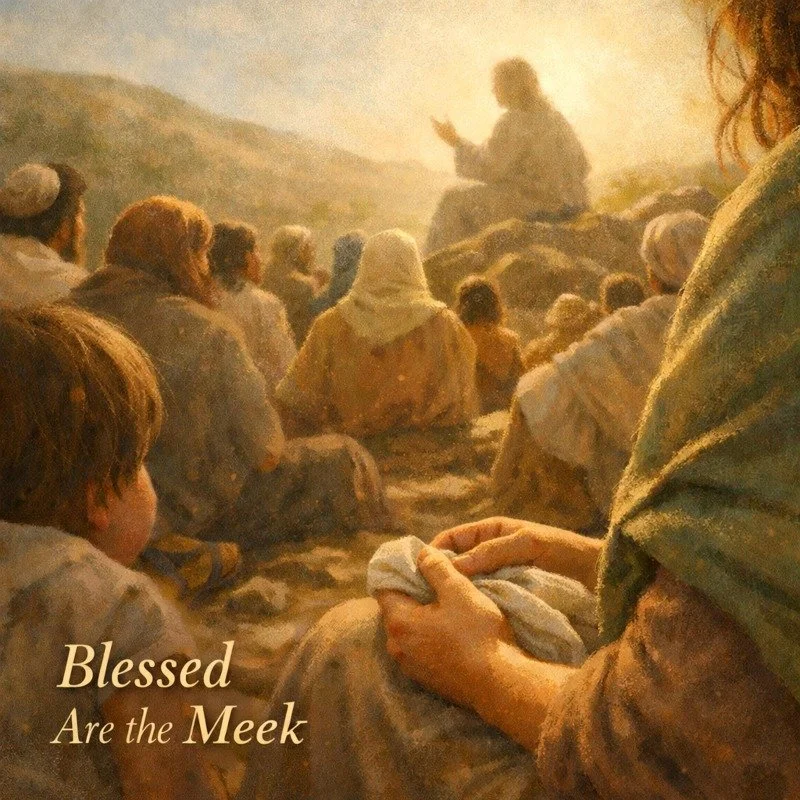
Scripture: Matthew 5:1-12
Reflection: I was drawn to how public the moment is and how personal it feels.
The crowd is large, the teaching simple, yet the words land differently for each listener.
What sounds like a blessing to some sounds impossible to others.
What stayed with me is the quiet reversal in the message, strength described as gentleness, fullness promised to those who feel empty.
I wrote this song about hearing hope spoken in a way that suddenly includes you,
when familiar ideas become intimate instead of distant.
Sometimes faith begins when you realize the promise was meant for you too.
Lord if it is You
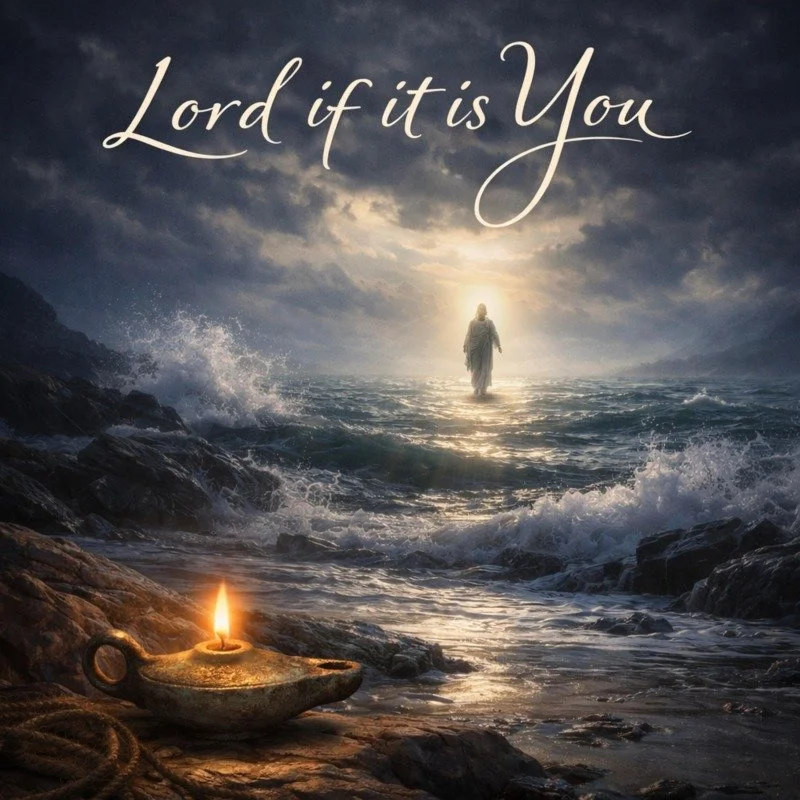
Scripture: Matthew 14:22-23
Reflection: I was drawn to the faith of the one who stayed behind.
The story usually follows Peter stepping onto the water,
but someone also watched the storm from the shore and lived with what that moment would ask of him afterward.
What stayed with me is that belief often reaches beyond the person called.
Trust becomes shared, carried by the ones who must accept the risks they did not choose.
I wrote this song about loving someone whose faith leads them into uncertainty,
and learning to find peace without controlling the outcome.
Sometimes faith is standing on solid ground while your heart walks into the waves.
Tentmaker’s Thread
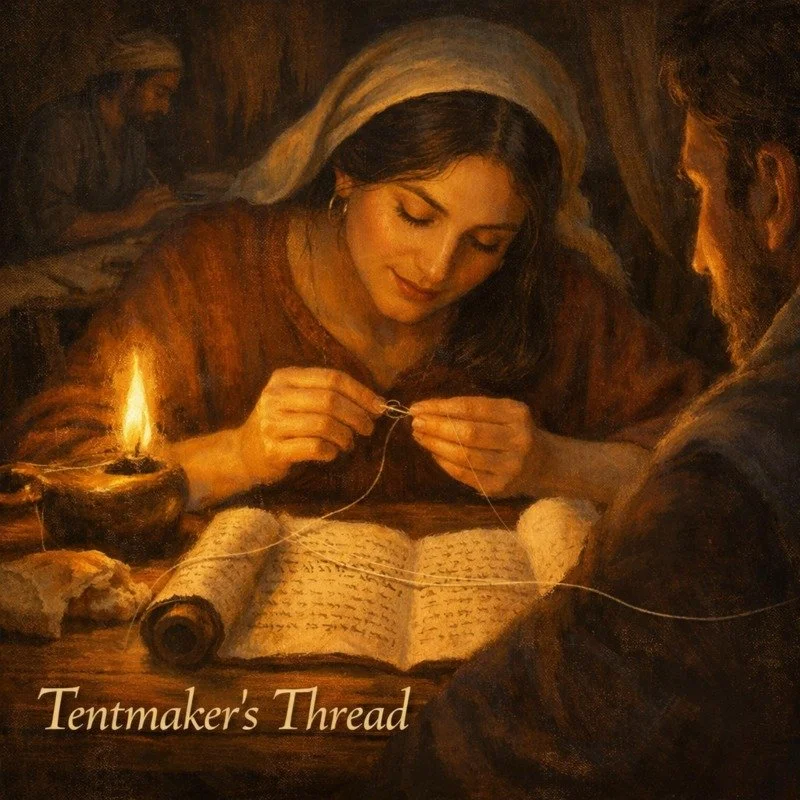
Scripture: Acts 18:1-3, 24-26
Reflection: I was drawn to how much of the story happens in the middle of daily work.
Priscilla and Aquila are not standing in crowds or on hillsides.
They are sewing, hosting, explaining, and patiently helping truth become clear to someone else.
What stayed with me is that influence here is relational and steady, not sudden.
The faith spreads through conversation, correction, and shared labor.
I wrote this song about the kind of calling that grows through ordinary faithfulness, when small acts of guidance shape something far larger than the moment feels.
Sometimes the work that changes the world looks like a normal day done with intention.
At Your Feet in My Kitchen
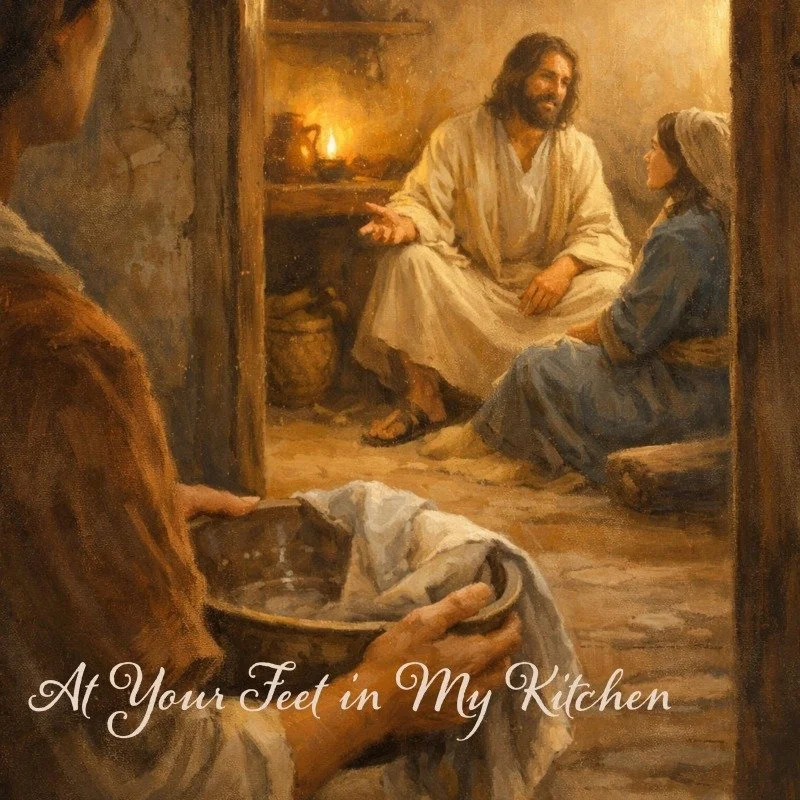
Scripture: Luke 10:38-42
Reflection: I was drawn to how ordinary the setting is.
Nothing dramatic is happening - a meal, a house, familiar responsibilities.
Yet in the middle of good and necessary work, attention becomes the real choice.
What stayed with me is that both responses come from care.
One serves, one listens, and the moment gently reveals what cannot be postponed.
I wrote this song about the tension between doing for someone and being with them, and how easily devotion can become distraction without meaning to.
Sometimes faith is choosing presence when productivity feels more justified.
Phoebe Servant of the Church
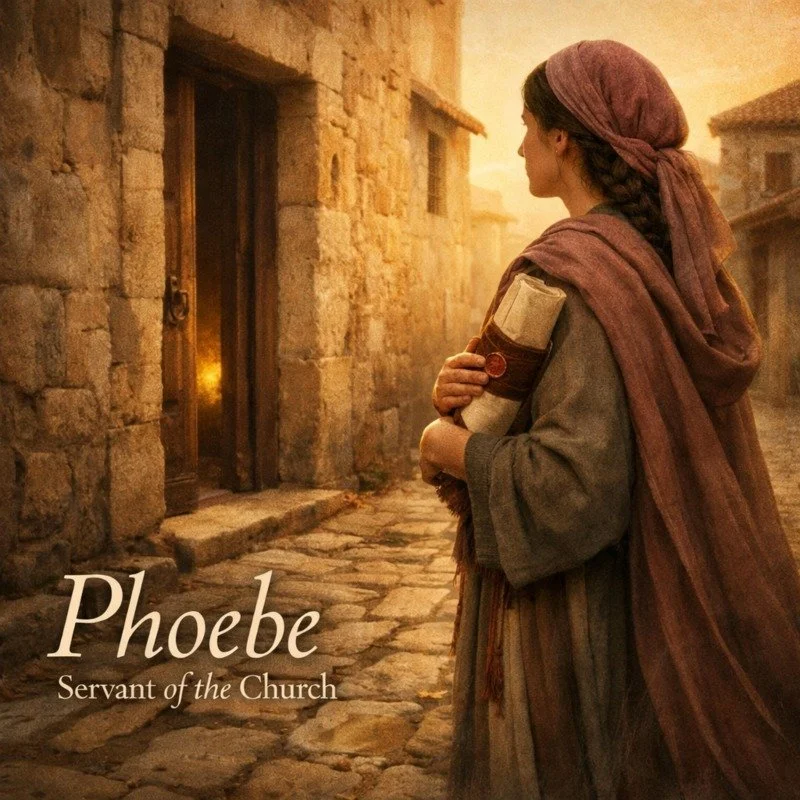
Scripture: Romans 16:1-2
Reflection: I was drawn to the quiet importance of her task.
Phoebe is not described through a miracle or a crisis.
She is entrusted with carrying a message and caring for people, work that requires reliability more than attention.
What stayed with me is how much the story depends on someone willing to be trusted.
The faith moves forward because she faithfully delivers what was placed in her hands.
I wrote this song about responsibility accepted without recognition,
and how steady service can shape history just as surely as dramatic moments.
Sometimes faith is simply proving trustworthy in what you were given.
Waiting in the Temple
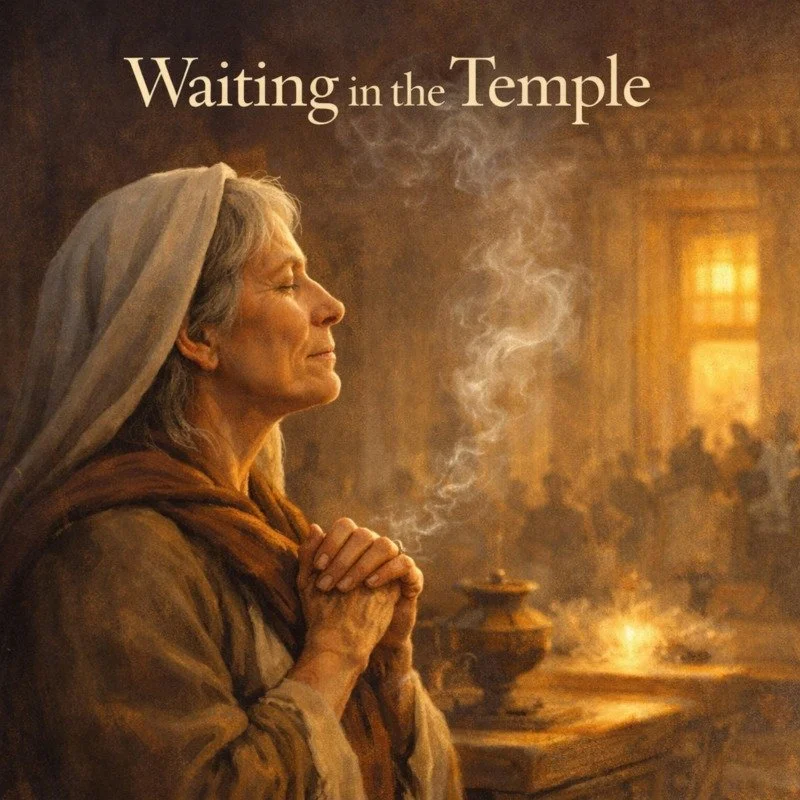
Scripture: Luke 1:5-25
Reflection: I was drawn to the years before the announcement.
Elizabeth’s story holds a quiet ache, hope carried so long it almost becomes part of your identity.
By the time the answer comes, she has already learned how to live faithfully without it.
What stayed with me is the gentleness of the moment. The miracle doesn’t erase the waiting; it gives meaning to every year that came before.
I wrote this song about prayers that remain unanswered long enough to reshape expectations, and the humility of receiving joy after you have stopped demanding it.
Sometimes fulfillment doesn’t return you to who you were it honors who you became while you waited.
Purple River

Scripture: Acts 16:13-15
Reflection: I was drawn to how unremarkable the setting is.
There is no crowd, no urgency - just conversation beside the water during an ordinary day of work.
Lydia isn’t searching for disruption, yet she remains open enough to recognize meaning when it reaches her.
What stayed with me is that her life doesn’t pause for faith; it makes room for it.
Her response is immediate and practical - she listens, believes, and then opens her home.
I wrote this song about the moment understanding becomes hospitality,
when belief turns into action without spectacle.
Sometimes faith begins in a quiet place and continues at your own table.
Woman at the Well
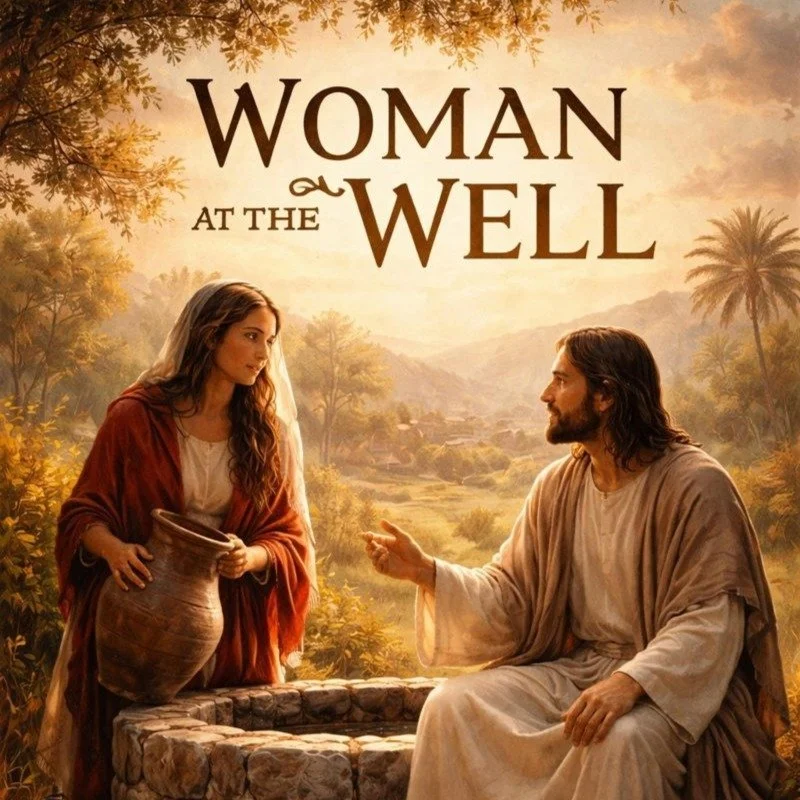
Scripture: John 4:4-30
Reflection: I was drawn to the conversation that becomes personal before it becomes public.
The setting is ordinary - water drawn in the middle of the day - yet the exchange moves quickly past surface talk into truth she cannot hide from.
What stayed with me is that she isn’t turned away after being known.
The moment she expects distance becomes the moment she is invited closer.
I wrote this song about the relief of being fully seen without rejection,
and how honesty can transform shame into testimony.
Sometimes change begins when you stop avoiding the truth and discover grace waiting there.
Daughters of the Story
After writing these songs, I realized I wasn’t drawn to the same kind of woman each time, I was drawn to the same thread.
Some waited for years.
Some acted in an instant.
Some spoke bravely.
Others stayed faithful in ordinary places.
They lived in distant cultures and unfamiliar days, yet their questions are still ours, fear, hope, responsibility, trust, patience, belonging.
None of them knew they were standing inside history. They were simply choosing as best they could with the light they had.
Scripture began to feel different to me while writing these, not a record to finish, but a place to recognize lives that still teach us how to live.
From them we learn courage without certainty, devotion without recognition, kindness that steadies another person’s faith, and trust that grows slowly in ordinary days.
Their testimonies were built in repeated choices the same kind of choices still placed quietly in front of us.
The invitation was never only to read about them, but to live the same faith in our own time.
We are the daughters of the Story.